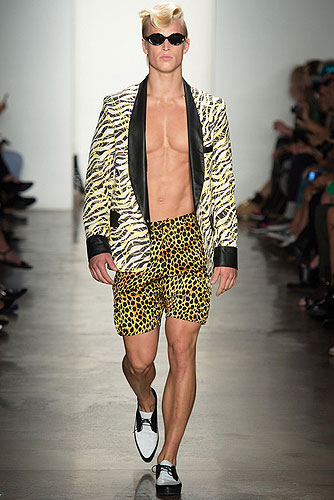
Romek Gelard Gello
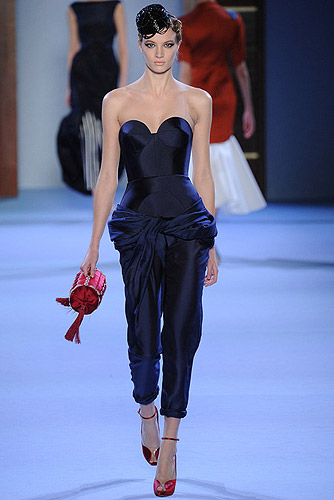
 Lisa Dengler
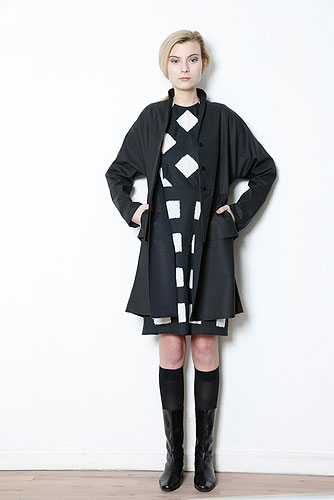
 Steve Frous
 Nhi Py
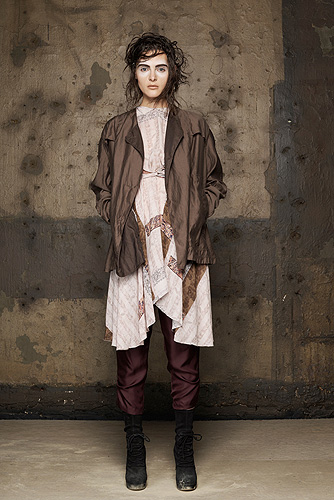
 Weronika Kumanek
 Levi's, the original, definitive jean brand, and Pictory announce "Secrets of Inspiring Women" a Levi's-sponsored photographic showcase celebrating inspirational women on Pictorymag.com. Inspired by Shape What's to Come, Levi's global initiative and web community which is designed to inspire and empower millennial women, photographers were invited to submit self-portraits and tell the story of getting to where they are as a woman, their mentors along the way, how they're impacting others and share advice for the next generation.
"Pictory is thrilled to partner with the Levi's brand to enable young women to tell the stories behind the pursuit of their passions and potential through photography," said Pictory founder Laura Brunow Miner.
"I love how the Levi's brand has taken up the charge to connect women by interests and industries to empower one another. The Levi's brand is a leader in encouraging creative expression: they've worked with an impressive array of indie photographers and filmmakers, produced community spaces for creative output through their Workshops series, all while staying true to the roots of their 150-year-old company. It's exciting to see them focus their influence as a pioneering brand on impacting the lives and careers of countless young women."
Photographer Maren Celest joined Pictory founder Laura Brunow Miner to guest curate the showcase. Renowned for film-based images, Maren recently shot Levi's Shape What's to Come Ambassador portraits. In addition to photography, Maren is a member of the Cashmere Clubhouse art collective. She also sings and plays the ukulele, keyboard and banjo in her band, The Photographers.
"As a pioneering brand, Levi's has long inspired people from all walks of life to go forth and pursue their passions, " said Maren Celest. "I'm delighted to be working with the Levi's brand, and in partnership with Pictorymag.com, to encourage dynamic young women to create new definitions of success and shape what's to come -- for themselves and the world at large."
"The Levi's brand has been shaping women's fashion since it introduced the first pair of women's jeans 75 years ago," said Mary Alderete, Vice President of Levi's Global Women's Marketing. "We are building on this legacy to help young women shape their futures. ShapeWhat'sToCome.com, and related projects, are designed to celebrate and inspire the young women who are shaping our world. The Pictory "Secrets of Inspiring Women' photographic showcase is a perfect vehicle for women to share the stories of their inspiration, growth and desire to shape what's to come."
ShapeWhatsToCome.com recently launched in the United States, United Kingdom and Japan. Twenty inspiring millennial "ambassadors", engaged by the Levi's brand and living in the U.S., UK and Japan, ranging from up-and-coming artists and performers to twenty-something entrepreneurs and advocates for social change, will enrich thecommunity with the fruits of their efforts.
"The Shape What's To Come initiative builds on the Levi's brand global commitment to empower young women to shape their futures by pursuing their passions and potential," added Alderete. "It's not just about being the biggest jeans brand for women—it's also about being the most relevant and beloved brand. We want to provide millennial women around the world with products and opportunities that fit her – both literally and figuratively."
 In an effort to further industry sustainability efforts, NIKE Inc released its Environmental Apparel Design Tool. Based on Nike's Considered Design Index, the release of the tool aims to accelerate collaboration between companies, fast-track sustainable innovation and decrease the use of natural resources like oil and water.
Designed and built by Nike over seven years with a six million dollar investment, the software-based Environmental Apparel Design Tool helps designers to make real time choices that decrease the environmental impacts of their work.
Recognizing the decline of natural resources and the need to move to a low-carbon economy, the tool is a practical way to rate how apparel designs score in reducing waste and increasing the use of environmentally preferred materials while allowing the designers to make real time adjustments.
Nike is committed to open innovation and welcomes others building and improving on this tool.
"This tool is about making it simple for designers to make the most sustainable choices right at the start of the product creation process. Over the past four years it has proved to be invaluable at Nike and has helped us create products with a higher sustainability standard," said Hannah Jones, Vice President of Nike Sustainable Business and Innovation.
"By releasing the tool we want others to improve on it and we hope to inspire further collaboration to create global industry standards for a level playing field, encourage widespread industry adoption of sustainable design practices and have more sustainable products available for the consumer."
The Nike football jerseys produced for South Africa 2010 are an example of how the tool helped designers produce the most environmentally-friendlyand technologically-advanced kits in football's history. Made from 100% recycled polyester, the material choice diverted 13 million plastic bottles from landfill.
In the last year alone, Nike doubled its use of recycled polyester, saving 82 million plastic bottles from landfill. If all apparel companies committed to converting one third of their polyester garments to recycled polyester, the demand for recycled polyester would be greater than the annual production of plastic bottles, diverting PET bottles from landfill.
"Nike's decision to open-source this design tool is a win-win because it leverages important intellectual capital to benefit an entire industry," said Mindy Lubber, president of Ceres, a leading coalition of investors and environmental groups that works with companies like Nike to address sustainability challenges. "Whether for sneakers or cars, it is hugely important to integrate water, chemical, energy and waste considerations into all product design. If all apparel companies use this tool, the impacts could be breathtaking, from less-clogged landfills to expanding our sustainable material industries."
Mike Barry, Head of Sustainability for Marks & Spencer, who has worked closely with Nike for several years on sustainability issues, said: "As a company committed to developing a sustainable business, we welcome this type of industry collaboration. The Nike tool will help apparel companies and retailers design more sustainable product. We firmly believe that sharing knowledge like this helps us all move towards a more sustainable future faster."
In addition to the Environmental Apparel Design Tool, Nike will also be releasing its Footwear Design Tool, Material Assessment Tool and Water Assessment Tool in 2011.
These efforts come after Nike's announcement earlier this year about the GreenXchange (GX), a Web-based marketplace where companies can collaborate and share intellectual property which can lead to new sustainability business models and innovation. Nike committed to placing more than 400 patents on GX for research, demonstrating its belief that the best way to stimulate sustainable innovation is through open innovation.
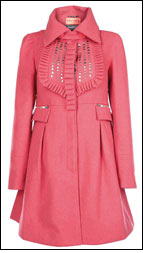 This winter, ONLY brings forth looks in four distinct trends- Chest -printed tees, tops, dresses and cardigans in various sexy Animal prints, English heritage inspired sweaters, knit dresses, jackets and high waisted pants in range of earthy shades; The perfect party wardrobe with Rock-chic dresses in lace and sequence, tops in soft silhouettes, printed tees with sequence and bling and stylish jumpsuits in hues of blacks, greys and whites and the cool and casual - American free sprit inspired collection housing tees with stars and stripes, pinafores, overalls, dungarees, coats, cardigans and dresses in blues, reds, whites and denim. The denims this season have vintage feel and are mainly dark denims with heavy washes.
ONLY embodies contemporary style fused with a twist of femininity and assures to add to your glamour quotient. The collection paves way for individual flair and offers women exciting new choices to begin the season with style.
ONLY makes the look of the season very unconventional and international with their new Fall winter collection, showcasing the latest trends in cuts and colours.
With a mission to denimize the world, ONLY is an authentic jeans brand for women. ONLY aims to transform everyday life from grey and monotonous to fun, colorful and creatively eventful. As an original jeans brand, you’ll find all must haves within jeans fashion and fittings in ONLY’s collections.
As per the terms of the agreement signed between the Angolan Finance Ministry and the Japanese Bank for International Cooperation (JBIC), the Luanda based Textang II factory, is likely to resume its operation in 2013.
The Japanese Embassy in Angola in a statement said that, the JBIC is to provide a loan of US $200 million to Angola to help it to restore the textile factory, within a period of two years. Also, it is likely to provide all the machinery required by the factory to start its operation.
This project to restore the textile facility based in the capital city of Angola is the first project that the JBIC would fund in Angola. The Japanese Government with this investment wishes to contribute to the area of technology transfer, expansion and diversification of the industry as well as employment generation in the country.
The restoration of Textang II, which has been closed down for more than two decades, constitutes a part of the government’s programme for diversification of the country’s economy and re-opening of the manufacturing industry.
Further, the government even intends to re-construct Benguela province’s África Têxtil 1º de Maio factory and Satec facility in Kwanza Norte province.
 Giordano’s 2010 Winter Collection, now available in stores across the country, features stylish urban outfits that bring a touch of warmth and comfort to every wardrobe as the cooler season approaches. The leading retailer’s new winter set include tees, long-sleeved tees, zip-up hoodies, sweaters, jackets, blazers, unisex cardigans, and long- and short-sleeved polos. Designed with mix-and-match flexibility in mind, the new collection boasts a contemporary, edgy look and is available in a palette of seasonal shades and classic neutrals.
Ishwar Chugani, Executive Director, Giordano ME, comments: “Giordano is a brand known for transforming wardrobe basics into fashion statements. Our 2010 Winter Collection really delivers when it comes to our core values of creating clothes of the highest quality at attractive and affordable prices.”
The highlight of this season’s collection is Giordano’s four-in-one jacket. Made of cotton and flannel, with inner and outer jackets that can be worn together or alone, it provides ease of movement and wearability in a no-nonsense style. With multi-layered options, it is flexible enough to take on whatever weather the season throws at it – from the warmest autumn day through to the coolest winter evening.
A key element for women in the Giordano winter collection is in its sweaters which are all about long silhouette. The full-zip sweaters, made from finest soft and warm 100% combed cotton comes in mock neck and feature a surprise variety of neck detailing for a scene-stealing look.
The men’s winter collection also boasts of sweaters in crew neck, mock neck with half-zip neck and full zip open. Its variegated stripes create a flattering style for casual and comfortable everyday clothing.
Winter colours also play out this season with new shades such as Winter White, Ash Grey, Raspberry, Grape, Garnet, Rupture Pink, Bison, Deep Purple and Ruby Red.
Giordano’s 2010 winter collection is now available at all stores region-wide.
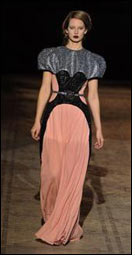 Since graduating from London College of Fashion in 2010 with a master’s degree in womenswear, Korea-based designer Jin Joo Ma has had her graduate collection picked up by many stylists and photographers and has been dubbed “an old meets new clash, culminating in a sophisticated and striking collection.”
Her designs displayed a unique style combining rigid glitter pieces and flowing feminine fabrics to create a modern take on power dressing. She described the influence behind the collection as “Mefale”; the ultimate balance of masculinity and femininity. She also took inspiration from ideas of escapism and self-defense, showing a real connection between her influences and their significance in the creative process.
The widespread coverage attained for her graduate collection from respected online publications such as Susie Bubble and Mirror Error is expected to be repeated as MAJINJOO prepares for London Fashion Week 2011.
MAJINJOO will be showcasing her latest work at the Charing Cross Hotel, Strand on Friday 18th February 2011 as part of LGN Events’ flagship off-schedule London Fashion Week show “A La Mode”.
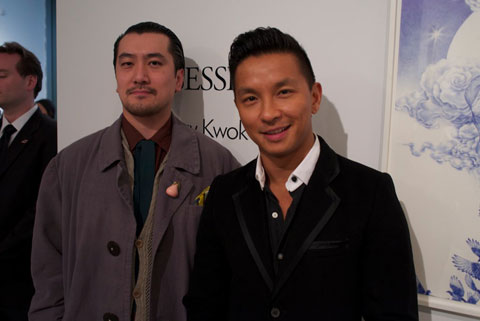
Three people enter a room: Popeye, Julius Caesar, and Georgina Chapman. No, that's not the beginning of a bad joke (though there's a buck in it for whoever comes up with the best punch line). All three found their way into the work of artist Cary Kwok, and all three are on a view at Obsession, a new exhibition of Kwok's work curated by none other than Prabal Gurung (above, with Kwok).
Kwok's intricate ballpoint pen drawings of his "obsessions" caught Gurung's eye a while back. And when the designer was offered the chance to curate a show at the gallery (he presented his first two collections in the space), Kwok was his first choice. "I wanted to do the exhibit because it takes my mind off of fashion, and it's good to take a little time off," Gurung laughed.
His inaugural show suggests he's got a good, playful eye for unlikely juxtapositions. (A portrait of Audrey Hepburn hangs side by side with a homoerotic rendering that looks like it could illustrate a particularly blue passage from William S. Burroughs.) "I wanted it to be a little tongue-in-cheek, but not obviously vulgar," Gurung said. His favorite among the ink-on-paper drawings include ones of Chanel perfume bottles, a peacock plume, and a caricature of the Marchesa designer (who made an appearance in the flesh at the opening, too). But the recently named CFDA/Vogue Fashion Fund winner (he scooped up one of the two $100,000 runner-up prizes) doesn't think of himself as an art buff—he just knows what he likes.
"Art to me is something you get absorbed in," Gurung told us. "You don't have to think about whether it inspires you or not, you just enjoy it."
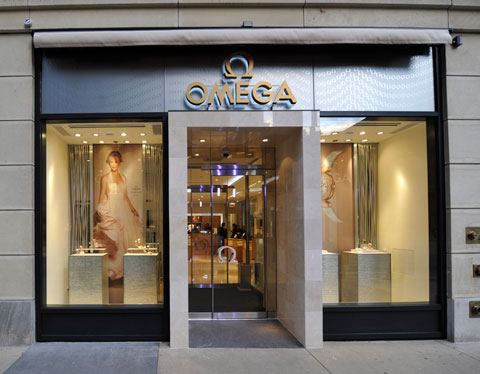
All the talk in retail these days is of China, India, and Brazil, but Omega feels it has discovered another emerging market: the good old U.S. of A.
The Swiss watch company is opening nine new stores here over the next few days in locations both obvious (L.A.; Chicago, pictured) and perhaps less so (Pittsburgh, Hackensack), and there are plans for 15 more in the first half of 2011. Why the bullishness? In New York en route to last week’s Chicago opening, the brand’s CEO, Stephen Urquhart, said he believes there are plenty of untapped American customers for watches in the $5,000-$10,000 range, the same consumers who will invest in a flat-screen TV. He added that he has been impressed by both the quality of the retail spaces his team has scouted in the U.S. and the caliber of the sales staff that the company has been training.
Wry and engaging are not the first characteristics you might expect to encounter in the chief executive of a venerable watchmaker based in the Swiss town of Biel/Bienne, but Urquhart is both. Showing a reporter his pink gold Seamaster Aqua Terra and explaining its annual calendar function, he jokes that the date is the most important thing on a watch, as you don’t necessarily need it to tell the time—you can use an iPhone for that.
Conquering America is just one of Omega’s current tasks—they are expanding in Asia, of course; they just launched their new Ladymatic model along with a Peter Lindbergh-lensed campaign starring Nicole Kidman; they’re looking forward to the next installment in the Bond franchise slated for 2012 (don’t be surprised to see Daniel Craig modeling the company’s wares again at some point); and last but not least, they’re getting set for the 2012 Olympics in London. Omega will once more serve as the official timekeeper, a feat that involves a team of 450, 150 of whom have already started work on the technical preparations.
But in many ways it’s the U.S. push that is the most interesting development, and no doubt other luxury companies will be watching their progress closely.
Are affluent Chinese consumers willing to travel just to shop?
It appears the biggest spenders, generally from tier 1 cities like Shanghai and Beijing, will go directly to Paris, NYC or Geneva to buy luxury goods. Many luxury buyers also flock to Hong Kong, the shopping mecca that's much closer to home. Going abroad (including H.K.) makes sense because of high Chinese import taxes on luxury goods, better selections, authentic goods, and better customer service. Of course, there is the prestige factor or the bragging right that you purchased your LV handbag from Paris.
In France, Chinese tourists surpassed all other nationalities as the biggest shoppers according to a recent French government survey. As a result, French travel companies are developing more shopping programs for the Chinese.
More Chinese are traveling abroad for business and for leisure, a result of the economic boom, growth in personal wealth and ease of travel restrictions. Even with the recent global recession, the Chinese tourists traveling abroad rose 5% in 2009 to 42.2 million from 7 million in 2001. Their total spending jumped 16% to $42 billion in 2009 from 2008. While the majority travel to Hong Kong and Macao, their growing presence is seen around the world. Analysts considered the rapid emergence of Chinese tourists as the most significant thing occurring in global tourism for a generation.
"Before 2003, the only destinations outside the Asia-Pacific area to which the Chinese government allowed its citizens to travel for leisure were Turkey and Egypt. Since then, Beijing has approved almost 100 countries as tourism destinations. The US was approved in June 2008 but only for citizens in a handful of China's largest and most prosperous areas."
According to surveys, the favorite activity of Chinese tourists is shopping and they like traveling in tour groups. Most are not concerned where they stay and prefer to save on accommodation so they can spend more on goods. "This is partly a cultural thing - I'm absolutely expected to bring back gifts for family and friends when I go abroad - but it is also because things like Hermes bags are just not available or are much more expensive in China," says Yvonne Du, a young professional who regularly goes on shopping trips to the US and Europe.
Reinforcing this shopping mentality is the fact that tour operators make more if tourists shop and therefore, they structure their tours packages based on economics. "For now the system is based on commissions earned on the amount of shopping tourists do," says Guy Rubin, managing partner at Imperial Tours in Beijing. "You have an odd situation where a great many outbound tour operators are breaking even or losing money until you factor in commissions for shopping. That means tours usually have to fit in sightseeing between visits to five shops a day.
Finally, Chinese tourists are relatively newbies to traveling abroad. Newbie travelers tend to concentrate on the tangibles or stuff (remember the Japanese and Koreans) to commemorate their trips while more mature or seasoned travelers focus on the experiential aspects of the destination.
 On the sidelines of the ‘International Conference on Denim’, fibre2fashion caught up with and chatted with a few reputed denim and jeans experts in the industry. One of them was Enrique Silla, the Managing Director of Eurotrend, a reputed Spanish textile group. He also established Jeanologia, a R&D consulting centre for garment finishing techniques in 1993.
He was one of the eminent speakers who delivered a presentation at the conference. During the presentation, he advised Indian jeans producers to take the lead in the world by adopting responsible technology.
We began this informative discussion by asking him as to whether the Indian denim producers will accept his advice since experience proves that, they adopt new measures only when pressurized by their intentional buyers. He replied by saying, “Till now, Indian or other Asian companies were adopting measures like eliminating sand blasting or spraying and adopting new measures like laser technology, only on the pressure from their principals”.
"But now these companies are aware that they cannot do business, without being concerned and become more responsible about the environment and very well know that jeans finishing cannot be still done using old technologies and need to adopt new technologies which are not environmentally harmful.
"A perfect example of this is China, where the industry has drastically transformed itself from being a labour-oriented one in to a technology-driven sector. So, this too will happen with Indian producers, since they are aware of the responsibilities and will not need external pressure to adopt new, efficient and environmentally friendly technologies”, he signed off by saying.